


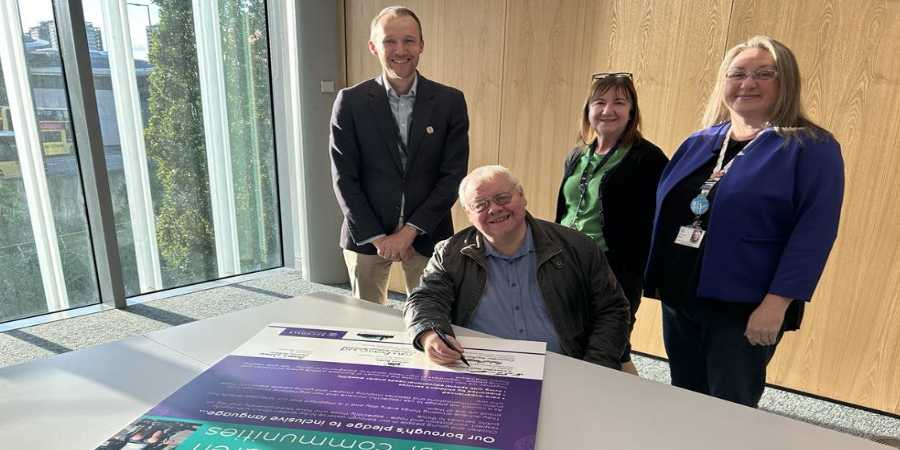
In a bold leap into the 21st century, Rochdale Borough Council has signed an official pledge promising to talk about children “with dignity, respect, compassion and hope”, a stunning reversal from the time-honoured tradition of referring to them as nuisances, statistics, or “problems for someone else”.
The move comes after councillors Kathryn Bromfield and Rachel Massey expressed concern about the use of stigmatising language in public forums when describing children in care or those with special educational needs and disabilities (SEND). According to sources, previous descriptors included such charming terms as “challenging cases”, “low aspiration cohorts” and “a nightmare on legs”.
In response, senior council figures, including leader Cllr Neil Emmott and the chief executive, have now solemnly pledged to use language that doesn’t make vulnerable children sound like either Dickensian pickpockets or feral background characters from a Channel 5 documentary.
“We’re not just affirming how we speak,” said Emmott, “we’re pledging how we lead”, which presumably means fewer budget cuts to children’s services disguised as “resilience opportunities”.
The pledge will be backed by an annual “language charter” and training programme for councillors, so they can be gently re-educated away from phrases like “burden on the system” and towards “young people with potential”, even if that potential currently involves setting fire to wheelie bins.
The initiative forms part of a trauma-informed approach to leadership, which is local government code for “we’re trying not to make things worse this time”.
Cllr Kathryn Bromfield, chair of the SEND Stakeholder Forum, explained: “Respect and dignity should be a given,” which in Rochdale is the political equivalent of saying “the bins should be collected”.
Meanwhile, Cllr Rachel Massey added: “The way we speak about children shapes how they see themselves,” prompting a moment of existential crisis in anyone who’s ever referred to their teenager as “a total write-off”.
The council also plans to write to the Local Government Association to recommend similar linguistic decency be baked into national training, a sort of ‘How Not to Accidentally Dehumanise a Child 101’.
Rochdale’s young people can now look forward to being referred to with compassion in all public statements, at least until the next budget review, at which point they may once again be reclassified as “unaffordable aspirations”.