

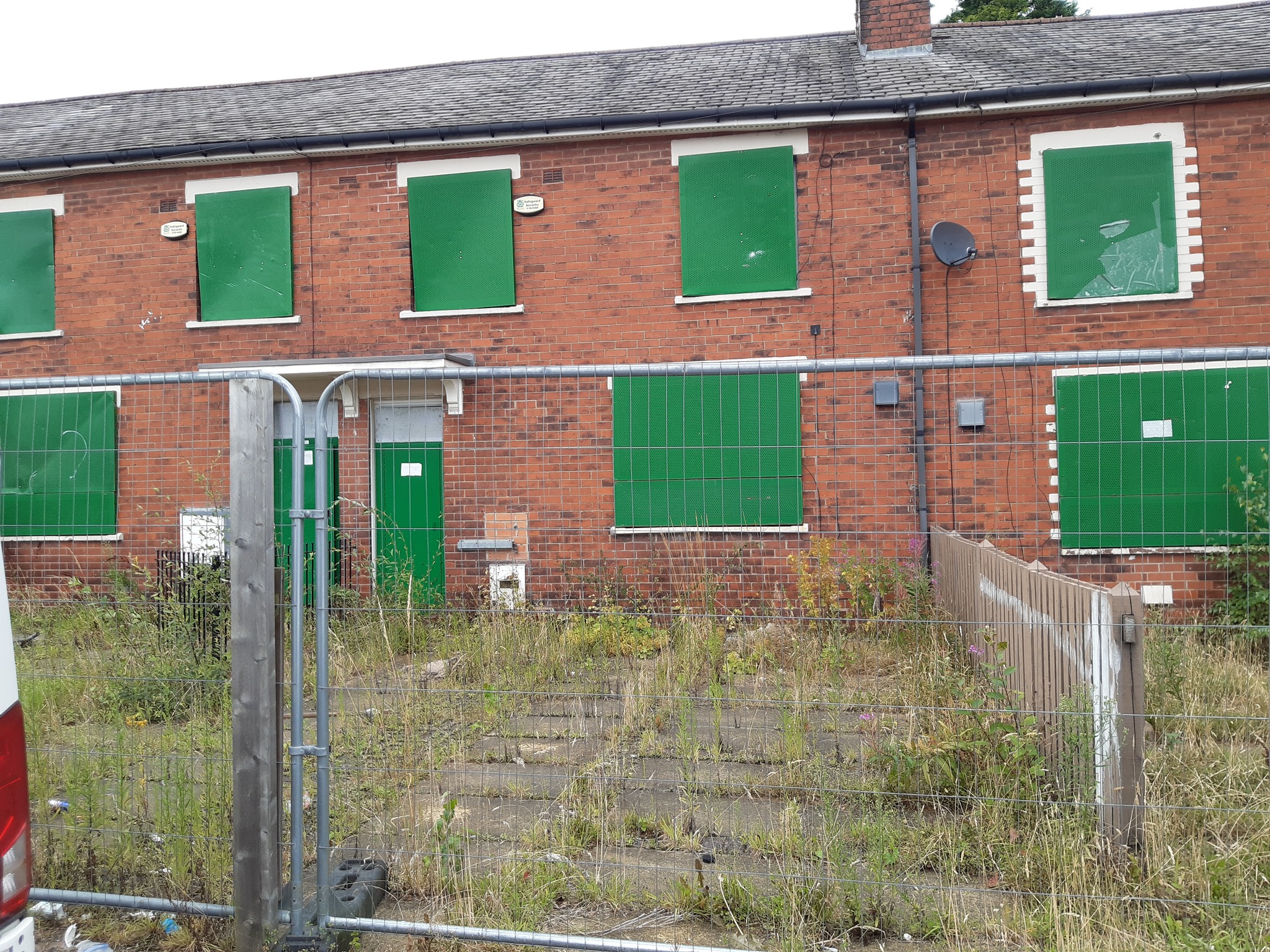
Six former homes on Claybank Street in Heywood are being demolished this week by Rochdale Boroughwide Housing, in what is being hailed as a “bold new strategy to fix the housing crisis by removing houses.”
RBH, a housing association that took over management of the borough’s council housing in 2012, has confirmed that the properties, once proud examples of indestructible northern brickwork, have been repurposed in recent years into cutting-edge exhibitions of fly-tipping chic.
“We had no choice,” said an RBH spokesperson, while carefully positioning a small decorative fence on a CGI rendering. “The ground conditions were poor, the houses were unsafe, and frankly the fly-tippers were starting to show signs of settlement. We believe every resident deserves to dump a mattress in peace without risking tetanus.”
The demolition, expected to last several weeks or until all six properties have been fully reincarnated as planning jargon, will see numbers 190 to 200 vanish in a flurry of bricks, bureaucracy and crushed dreams. Once complete, the site will be transformed into a temporary wasteland of hope, surrounded by a modest fence to keep out both optimism and local youths.
RBH has said it might use the land for new homes in the future, once all parties have agreed on the correct number of unaffordable units and how many luxury bins can fit on the plot.
Local residents have responded with a mixture of cynicism, outrage, and the haunting knowledge that they’ve seen this episode before. One anonymous contributor, known only as Participant 331, questioned the wisdom of knocking down homes built from Accrington brick, a substance only slightly less indestructible than smugness.
“These houses could’ve stood for another century,” they said. “But no, easier to knock them down, let the weeds move in, and eventually flog the land to someone with a vision and a contempt for planning laws.”
Others pointed out the curious contradiction of a housing association fixing the housing shortage by creating less housing. Deb Tough suggested it might have been “more cost effective to just do them up,” while Jackie Pearce asked whether it might be worth having some actual houses for people trying to move out of their parents’ lofts.
RBH responded with the classic: “The homes were not structurally safe due to poor ground conditions,” which is usually code for “someone somewhere made a spreadsheet decision.”
Meanwhile, the fence is expected to go up sometime next month. It will be accompanied by a laminated sign explaining that something will happen here eventually, possibly involving housing, definitely involving disappointment.