

Historic gothic building continues to lure unsuspecting tourists with stained glass, civic pride, and the crushing weight of Victorian architecture.
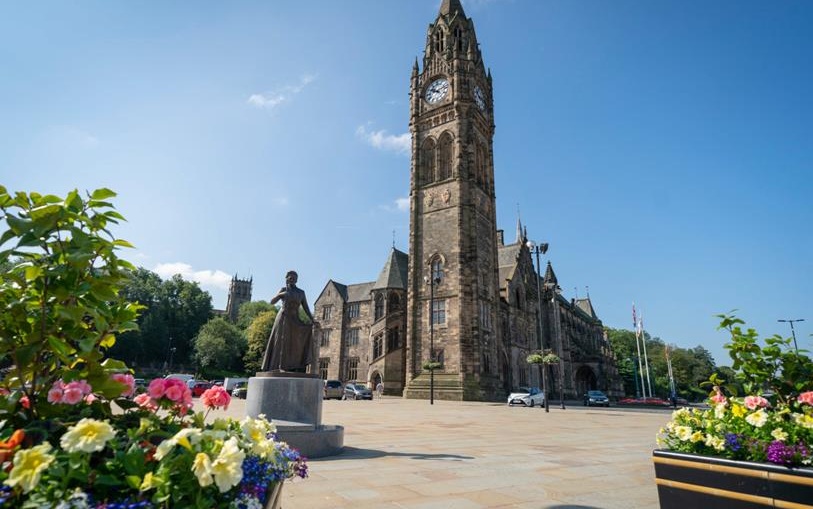
Rochdale Town Hall, the only building in Britain simultaneously used for wedding photos, council bureaucracy, and existential despair, has somehow maintained its status as a top attraction, despite the best efforts of modernity and satellite navigation apps steering visitors elsewhere.
According to Rochdale Council, the 19th-century monument to stone masonry and municipal optimism ranked as the 13th most-visited attraction in Greater Manchester last year, pulling in over 90,000 visitors. That’s roughly one person for every time a Rochdale local has sighed and said, “Well, it’s nice in there, anyway.”
£20 million to make the inside look like it always did, but cleaner
Built in 1871 for the modest sum of £160,000, equivalent to the GDP of several small countries, the town hall recently underwent a £20 million restoration project. It took four years, three council meetings, and approximately 12,000 litres of industrial-strength polish to complete.
The latest renovations included transforming once-forgotten rooms into gleaming tourist traps, such as the former office space now reborn as the Mayor’s Parlour, ideal for welcoming dignitaries, or hiding from them, depending on the political climate.
Cultural beacon or architectural Stockholm syndrome?
The council was quick to trumpet the building’s inclusion in Greater Manchester’s “Town of Culture” title for 2025–2026, a bold move considering Rochdale’s competition includes cities with working fountains and more than one Pret A Manger.
“We invite you to walk through our magnificent Great Hall, marvel at the stained glass, and ignore the creeping suspicion that you’re just here because the car park was free,” said a spokesperson wearing a high-vis vest and a desperate smile.
Still more popular than most in-laws’ living rooms
With its turreted towers, grotesque gargoyles, and air of imperious self-importance, the town hall has become a pilgrimage site for lovers of neo-gothic excess and municipal overcompensation.
Guided tours are available, presumably for those who want to hear about local governance while trying not to think about how cold it is inside even in August.
Bookings are advised, sanity is optional.